Release time : 2026-06-29 Source :FuelcellChina; National Energy Administrative
Beijing, China — China's National Energy Administration (NEA) has reaffirmed its commitment to accelerating the coordinated development of conventional oil and gas infrastructure with emerging hydrogen energy transportation systems, signaling a new phase in the country's long-term hydrogen infrastructure strategy.
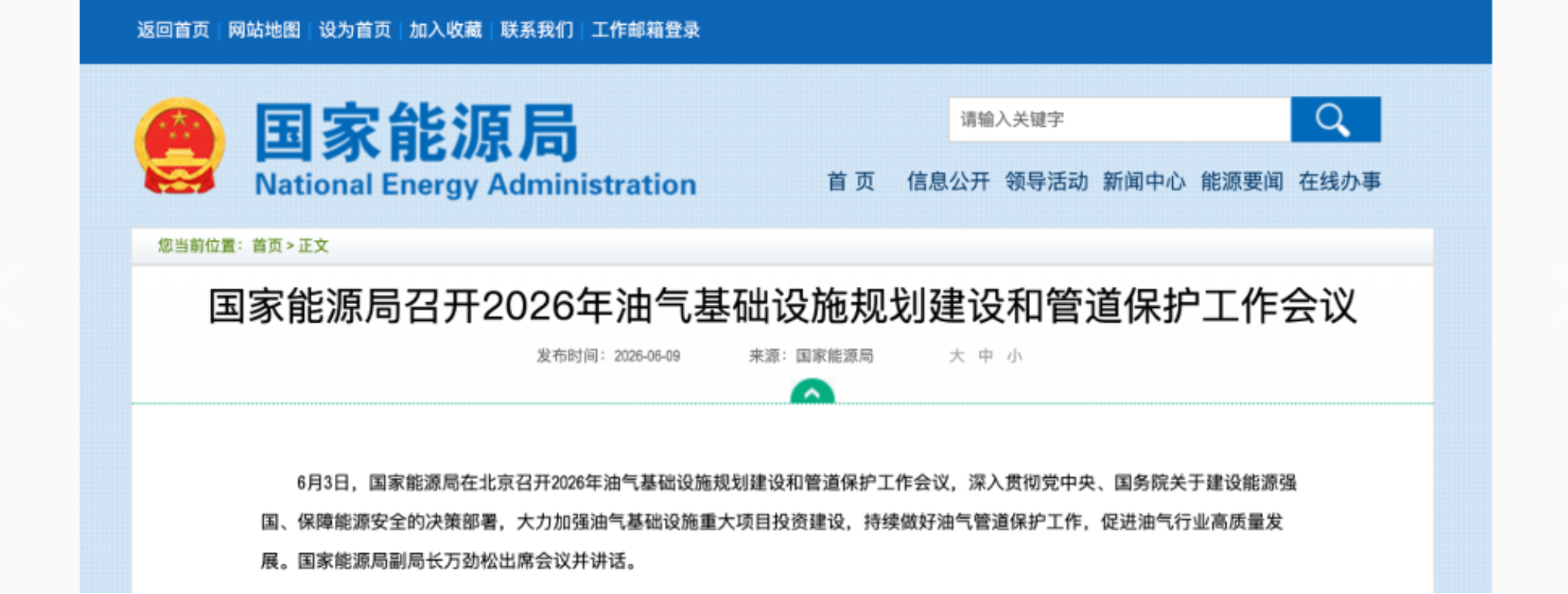
During the 2026 National Work Conference on Oil & Gas Infrastructure Planning, Construction and Pipeline Protection, held recently in Beijing, the NEA outlined key priorities for the coming years, including further expansion of the national integrated oil and gas pipeline network, increased oil and gas storage capacity, and closer integration of pipeline systems capable of transporting hydrogen and other low-carbon energy carriers.
The policy direction aims to strengthen China's energy security while laying the infrastructure foundation for a future low-carbon energy system.
Hydrogen Pipeline Development Added to National Energy Infrastructure Agenda
A key message from the conference was the emphasis on coordinated development between conventional oil and gas pipelines and hydrogen-based energy transportation systems.
According to the NEA, China will continue upgrading its nationwide pipeline network not only to improve the security and flexibility of oil and natural gas supply but also to support the transmission of emerging energy carriers, including hydrogen, ammonia, and methanol.
The move reflects the government's broader strategy of integrating traditional energy infrastructure with new-energy technologies, enabling a smoother transition toward carbon neutrality.
Building on Infrastructure Achievements During the 14th Five-Year Plan
Officials noted that substantial progress had been made during the 14th Five-Year Plan (2021–2025) in expanding China's oil and gas transmission network and underground gas storage facilities.
The strengthened infrastructure played an important role in maintaining domestic energy supply amid international geopolitical tensions and extreme weather events, significantly enhancing the resilience of China's energy system.
Looking ahead, authorities will further improve coordination between national trunk pipelines and provincial pipeline networks, optimize third-party pipeline access mechanisms, and accelerate the development of an interconnected nationwide transmission system.
Digital Technologies to Enhance Pipeline Safety
The conference also highlighted the importance of strengthening pipeline safety and risk management.
Authorities plan to increase the application of digital technologies, including artificial intelligence, intelligent monitoring systems, and drone-based inspections, to improve operational efficiency and reduce safety risks associated with pipeline encroachment and third-party construction activities.
The deployment of smart inspection technologies forms part of China's broader digital transformation strategy for critical energy infrastructure.
Preparing for Peak Natural Gas Demand
Ensuring secure natural gas supply during the upcoming summer peak demand season was identified as another key priority.
The NEA called for stronger coordination among upstream gas producers, PipeChina, and provincial energy authorities to enhance cross-regional resource allocation, emergency supply capabilities, and integrated gas-power coordination.
The objective is to ensure stable energy supplies for both industrial users and residential consumers while maintaining overall system reliability.
Existing Pipeline Network Could Accelerate Hydrogen Transportation
Since the beginning of 2026, China has continued upgrading its national oil and gas infrastructure, with increasing attention given to the potential conversion and utilization of existing pipeline corridors for multiple clean energy carriers.
Rather than serving exclusively oil and natural gas, future pipeline systems are expected to accommodate hydrogen, ammonia, and methanol, creating a more diversified energy transportation network.
This approach could significantly reduce the cost and time required to establish a nationwide hydrogen transportation system by leveraging existing infrastructure assets.
Looking Ahead to the 15th Five-Year Plan
Earlier this year, Liu Hong, Director-General of the Oil and Gas Department of the NEA, emphasized that China's mature oil and gas industry has strong synergies with the hydrogen value chain, including hydrogen production, storage, transportation, and utilization.
According to Liu, the country's extensive oil and gas pipeline network provides an economic foundation for developing large-scale hydrogen and green fuel transportation systems.
During the upcoming 15th Five-Year Plan (2026–2030) period, China is expected to further modernize its natural gas trunk pipeline network while advancing research, demonstration, and potential conversion of suitable pipelines for transporting green hydrogen, green ammonia, and green methanol.
The coordinated development of conventional and new-energy pipeline systems is expected to become a key component of China's strategy for building an integrated, low-carbon national energy network.
Industry Perspective
The latest policy signals indicate that hydrogen pipeline transportation is moving from technical research toward national infrastructure planning. While dedicated hydrogen pipeline networks remain at an early stage, integrating hydrogen into existing oil and gas transportation systems could substantially lower infrastructure costs and accelerate commercialization.
For China's hydrogen industry, the coordinated development of oil, gas, hydrogen, ammonia, and methanol pipeline systems represents an important step toward establishing a comprehensive low-carbon energy transportation network capable of supporting large-scale deployment of renewable hydrogen and its derivatives over the coming decade.
Exhibitor/Conference Consultation
Contact: Ms. Becky CHEN
Tel: +86 15910580218
Email: becky@cntigerexpo.com
Exhibitor Consultation
Contact: Mr. Lito HU
Tel: +86 13601321637
Email: lito.hu@cntigerexpo.com
Exhibitor Consultation & Media Cooperation
Contact: Ms. Yasmin ZHENG
Tel: +86 13621183385
Email: zhengyaxin@cntigerexpo.com