Release time : 2026-08-25 Source :Organizing Committee
ZHENGZHOU, China — Construction has begun on a bio-hydrogen production and refueling integrated station in the Zhengzhou Economic and Technological Development Zone in Henan Province, marking the third project of its kind in China and the first in both Henan Province and Zhengzhou.
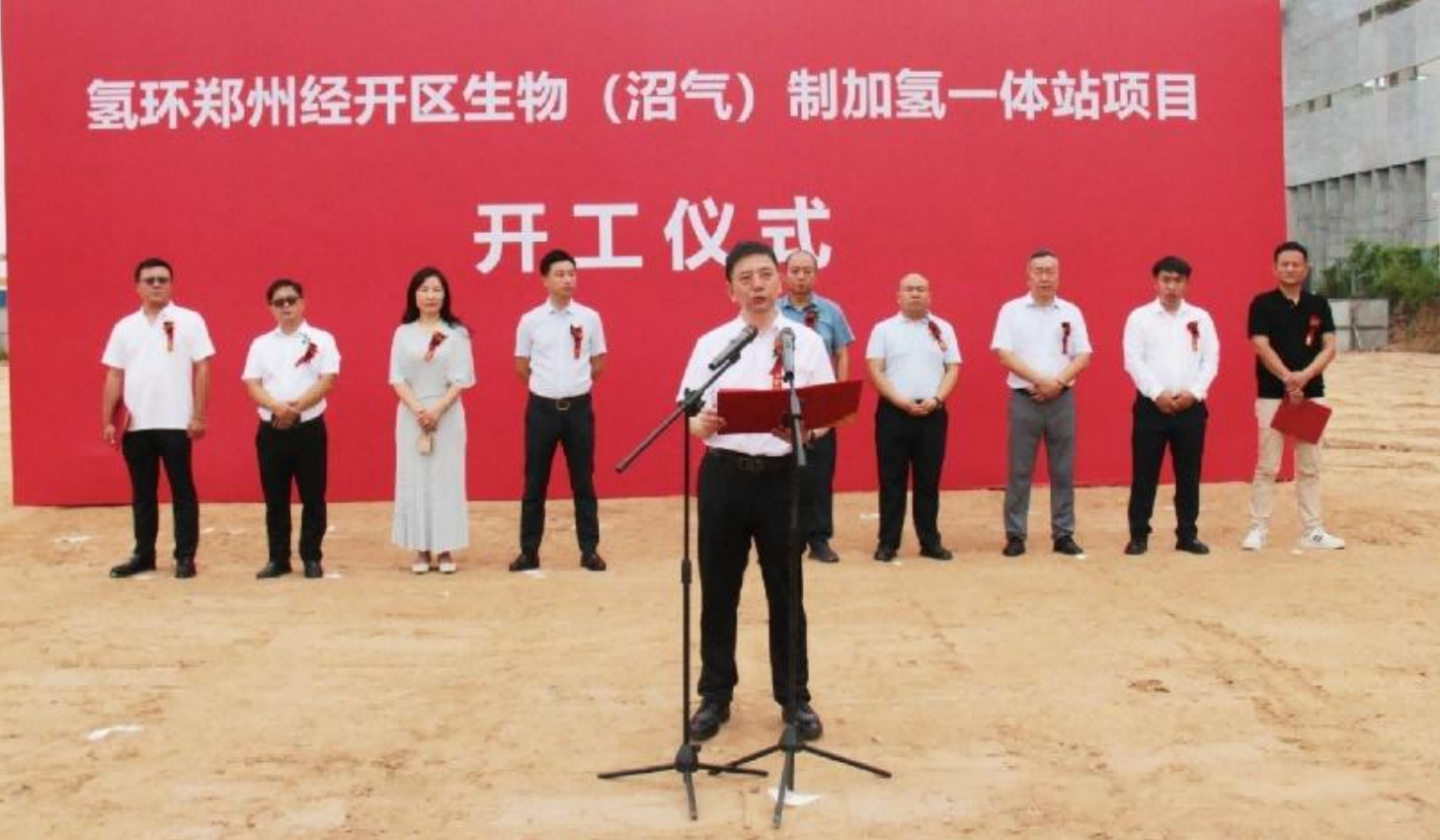
The groundbreaking ceremony was recently held for the Hydrogen Loop Zhengzhou Economic and Technological Development Zone Bio-hydrogen Production and Refueling Integrated Station. The project is being developed by Zhengzhou Hydrogen Loop Hydrogen Technology Co., Ltd., a wholly owned subsidiary of Beijing Hydrogen Loop Energy Technology Co., Ltd.
Construction preparations began in late March 2026, with the facility scheduled to be completed and commissioned in early November. Once operational, the station is expected to produce and supply 3 metric tons of green hydrogen per day, enough to serve approximately 300 hydrogen fuel cell vehicles. The project is also expected to reduce carbon dioxide emissions by more than 20,000 metric tons annually.
The station will be equipped with two containerized bio-hydrogen production units, rated at 500 m³/h and 1,000 m³/h, respectively. The equipment was independently developed by Beijing Hydrogen Loop Energy Technology Co., Ltd. and is described by the company as domestically pioneered technology protected by proprietary intellectual property rights. The units have already been deployed in multiple projects.
Designed specifically for integrated hydrogen production and refueling stations, the containerized systems feature a compact footprint, high hydrogen-conversion efficiency and ultra-low emissions. Their containerized design also reduces the visual and industrial impact typically associated with hydrogen production facilities.
The units require no on-site assembly. Once connected to water, electricity and biogas-derived feedstock, they can produce hydrogen meeting the requirements for hydrogen fuel cell vehicles. According to the project developer, this modular approach can significantly shorten on-site construction schedules while reducing safety risks associated with on-site installation.
The project has attracted interest from hydrogen refueling station investors and hydrogen transportation companies. Several station operators have expressed interest in adopting the company’s containerized hydrogen production equipment and integrated bio-hydrogen production and refueling model, while hydrogen transport companies are looking to use the project’s green hydrogen after the station enters operation in November.
Once commissioned, the station is expected to help address two major challenges facing Zhengzhou’s hydrogen fuel cell vehicle sector: limited access to hydrogen refueling and high refueling costs.
The integrated production and refueling model could also provide an alternative to externally sourced hydrogen, which currently involves relatively high transportation costs and supply prices. More importantly, the project is intended to increase the availability of green hydrogen for Zhengzhou’s growing hydrogen industry.
By combining on-site hydrogen production with refueling infrastructure, the project aims to reduce reliance on externally transported hydrogen and provide a more localized hydrogen supply for fuel cell mobility applications.
Exhibitor/Conference Consultation
Contact: Ms. Becky CHEN
Tel: +86 15910580218
Email: becky@cntigerexpo.com
Exhibitor Consultation
Contact: Mr. Lito HU
Tel: +86 13601321637
Email: lito.hu@cntigerexpo.com
Exhibitor Consultation & Media Cooperation
Contact: Ms. Yasmin ZHENG
Tel: +86 13621183385
Email: zhengyaxin@cntigerexpo.com